
Matcha Cultivars and Harvest: Okumidori, Samidori, First Flush
Why Yabukita makes poor matcha, what Okumidori, Samidori, Saemidori and Asahi bring, and how first vs second flush changes theanine and price.
Restocks sell out in minutes — get the alert in Discord.
Join DiscordWine drinkers talk about grapes and vintages. Matcha has the same two levers, cultivar and harvest, and they explain a lot of what separates a $0.30 per gram powder from a $5 per gram one. Here is what Japan's national and prefectural tea research bodies say about each.
What is a matcha cultivar?
A cultivar is a named, clonally propagated variety of the tea plant, bred or selected for traits like budding time, yield, disease resistance, color and flavor. Japan registers them officially, and most commercial fields are planted with a handful. According to Japan's Ministry of Agriculture (MAFF), Yabukita alone covered 64 percent of the country's tea area in fiscal 2024, followed at a distance by Yutakamidori (7 percent), Saemidori (6 percent) and Okumidori (4 percent). Matcha-focused regions look very different: in Kyoto, Samidori and Okumidori together make up about a fifth of tea area, and Nishio grows roughly half its tencha from non-Yabukita cultivars.
| Cultivar | Origin | Budding | Why it matters for matcha |
|---|---|---|---|
| Yabukita | Japan's dominant cultivar; 64% of tea area | Mid | Sencha workhorse; weak color response under shade |
| Okumidori | Registered national cultivar | Late | Deep green leaf; 12% of Kyoto, ~20% of Nishio |
| Samidori | Kyoto, native Uji selection (1954) | Mid | Glossy leaf, excellent tencha color and flavor |
| Asahi | Kyoto, native Uji selection (1954) | Mid | Kyoto calls it especially excellent tencha; used for competition tea |
| Saemidori | NARO, Yabukita x Asatsuyu (1991) | Early | Bright green, rich taste, suited to shading; 16% of Kagoshima |
| Seimei | NARO (2020), Saemidori offspring | Early | Bred for tencha; higher yield, vivid green buds |
Why isn't Yabukita the best cultivar for matcha?
Because it was built for sencha. Yabukita is hardy, reliable and flavorful as a steamed, rolled leaf tea, which is why it dominates Shizuoka at 88 percent of tea area. But a December 2025 House of Councillors research paper explains that under shade Yabukita's chlorophyll response is sluggish, so the leaves do not turn the vivid green that tencha needs, and being cut off from sunlight puts stress on the plant. That is a big reason Japan's sencha regions cannot convert to matcha overnight, and why the national tea policy now promotes shade-friendly cultivars instead.
What are Samidori, Asahi and the other Uji cultivars?
They are Kyoto's own matcha specialists. The Kyoto Prefectural Tea Research Institute says Asahi, Samidori and Ujihikari were all selected in 1954, Asahi and Samidori from native Uji plants, and that all three are grown under intensive hand-picked management as the premium tencha of the Uji brand. It describes Asahi as especially excellent as tencha and often used for competition tea, and Samidori as having glossy leaves and excellent tencha color and flavor. For machine harvesting, the institute registered Tenmiyo, a Samidori seedling, in 2006, noting it readily develops the characteristic shaded aroma. MAFF data puts Samidori at about 9 percent of Kyoto's tea area.
What do Okumidori and Saemidori bring to matcha?
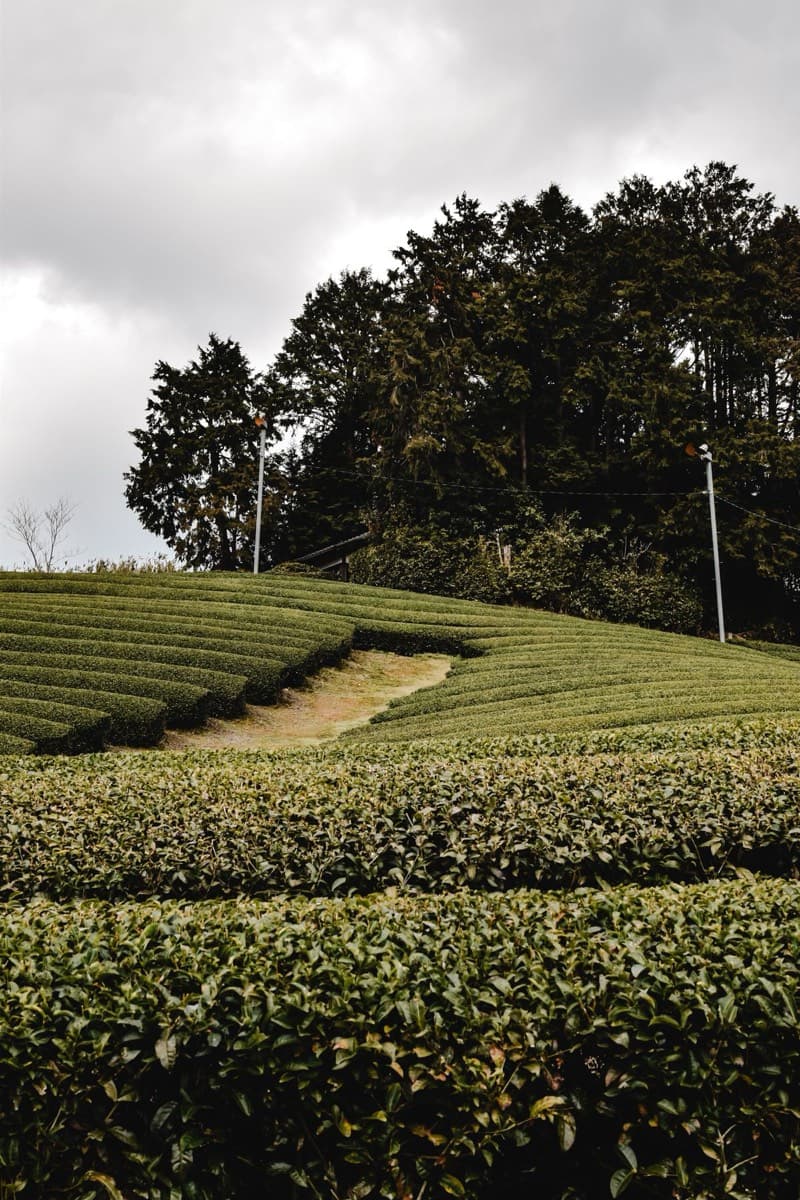
They are the two national cultivars most often named on matcha tins. Okumidori is a late-budding registered cultivar noted for its deep green leaves; it makes up 12 percent of Kyoto's tea area and about 20 percent of Nishio's tencha fields. Saemidori, bred by Japan's national research agency NARO from Yabukita and Asatsuyu and registered in 1991, buds four to seven days earlier than Yabukita. NARO's handbook says its tea beats Yabukita in both first and second flush, especially in color and taste, and that it suits shaded teas. It is named for its bright, clear green new leaves and makes up 16 percent of Kagoshima's tea area.
Which new cultivars are being bred for matcha?
The headline one is Seimei, registered by NARO in 2020 from a Saemidori cross. NARO says it out-yields both Yabukita and Saemidori in every flush, has vivid green buds that tolerate shading, and suits tencha as a raw material for the matcha and powdered tea, demand for which it notes is surging. Japan's tea policy explicitly promotes it, but the House of Councillors paper notes it covered only 130 hectares, 0.4 percent of tea area, in 2023. New plantings take about five years to yield a stable harvest, so matcha from new cultivars will take years to reach tins in volume.
How much does harvest timing change matcha?
At least as much as cultivar. First flush, the spring growth picked from late April into May, is the matcha harvest. MAFF reports 2024-crop first-flush tencha averaged 3,891 yen per kilogram against 1,990 yen for second flush. Chemistry follows price: a 2025 Plants study found about 978 mg of L-theanine per 100 g in a first-harvest Uji matcha versus 352 mg in a summer-harvest food grade, with caffeine and EGCG also lower. At the 2026 Uji tea market in Kyoto, which ran April 24 to July 31, first-flush tea made up most transactions. Our ceremonial vs culinary guide covers what later harvests are used for.
How long is matcha shaded before harvest?
Usually two to three weeks or more, with the shade getting heavier over time. Nishio growers described to Tea & Coffee Trade Journal a double layer of black cloth: the first blocks about 70 percent of light for roughly two weeks, and the second takes it to 95 to 97 percent. Shading changes the leaf directly: a 2022 study in the International Journal of Molecular Sciences found that 85 to 95 percent shade for 20 days "increased the theanine and caffeine contents, while decreasing" key catechins, and raised chlorophyll up to 1.4 times. That is where matcha's sweetness and color come from, and why cultivars that tolerate heavy shade matter.
Should you buy single-cultivar matcha?
Buy it to learn, not because it is automatically better. Many established houses sell their grades as blends; Ippodo, for example, describes its Ummon as one of its richest matcha blends. Blending lets a house hit the same taste every year despite weather. A single-cultivar tin is more like a single-origin coffee: you taste one plant's character, such as Okumidori's deep green body or Asahi's refinement, and it can vary more between years. Try one alongside your usual blend, prepared the same way, and the differences in this guide become obvious in the bowl.
Sources
- NARO — Tea cultivar handbook, 6th edition (Japanese)
- Kyoto Prefectural Tea Research Institute — Uji cultivars (Japanese)
- MAFF, Oct 2025 — The current state of tea (Japanese): cultivar shares, flush prices
- House of Councillors research office, Dec 2025 — Expanding tea exports: the state of matcha supply (Japanese)
- Tea & Coffee Trade Journal, Mar 2025 — Nishio remains at the center of matcha production in Japan
- Plants (MDPI/PMC), 2025 — Comparative multianalytical characterization of different grades of matcha
- International Journal of Molecular Sciences (PMC), 2022 — Effect of shading on matcha green tea
- Global Japanese Tea Association — Japanese Tea Report, August 2026
- Ippodo — Ummon product page
FAQ
What is the best cultivar for matcha?
There is no single best one, and many top grades from Kyoto houses are blends. That said, Kyoto's own tea research institute singles out Asahi as especially excellent tencha that is often used for competition tea, and Samidori for its color and flavor. Okumidori and Saemidori are widely respected national cultivars with strong color. If you want to learn what you like, a single-cultivar tin from one of these is the clearest way to taste the differences.
Is single-cultivar matcha better than a blend?
Not inherently. Blending lets a tea house balance sweetness, umami, color and aroma and keep a grade consistent from year to year, which is why the established houses sell many grades as blends; Ippodo, for example, describes its Ummon grade as a blend. Single-cultivar matcha is more about character and transparency: you taste one plant's personality, which can vary more by year. Think of it like single-origin coffee versus a house espresso blend.
What does first flush mean for matcha?
First flush, ichibancha, is the first spring growth, picked from late April into May depending on region and cultivar. It carries the most L-theanine and the sweetest, most savory taste, and it commands the highest price: 2024-crop first-flush tencha averaged 3,891 yen per kilogram versus 1,990 yen for second flush, according to Japan's agriculture ministry. Second and later flushes are cheaper and typically end up in culinary grades.
Why is Yabukita bad for matcha?
It is an excellent sencha cultivar, which is why it covers about 64 percent of Japan's tea area and 88 percent of Shizuoka's. But a December 2025 House of Councillors research paper notes that under shade its chlorophyll response is sluggish, so the leaves do not turn the vivid green tencha needs, and the shading stresses the plant. It can still make decent matcha, but shade-adapted cultivars do it better.
Never miss a matcha restock
Join the free Discord community and get an instant alert the moment your grade is back — or sign up to browse live stock across every major Japanese tea house.
Sources
- https://www.naro.go.jp/publicity_report/publication/files/cha_hinshu_handbook06.pdf
- https://www.pref.kyoto.jp/chaken/mame_ujihinnshu.html
- https://www.maff.go.jp/kanto/seisan/engei/tokusan/attach/pdf/index-8.pdf
- https://www.sangiin.go.jp/japanese/annai/chousa/rippou_chousa/backnumber/2025pdf/20251202087.pdf
- https://www.teaandcoffee.net/feature/36475/nishio-remains-at-the-center-of-matcha-production-in-japan/
- https://pmc.ncbi.nlm.nih.gov/articles/PMC12157965/
- https://pmc.ncbi.nlm.nih.gov/articles/PMC9696345/
- https://gjtea.org/japanese-tea-report-august-2026/
- https://ippodotea.com/collections/matcha/products/ummon-no-mukashi-40g