
Usucha vs Koicha: Thin vs Thick Matcha, and Which Grade to Buy
Usucha is 2 g of matcha whisked into 60 ml; koicha is 4 g kneaded into 30 ml. How they differ in taste, caffeine and cost, and why koicha needs top grades.
Restocks sell out in minutes — get the alert in Discord.
Join DiscordMost matcha sold abroad is drunk as a latte, so "usucha" and "koicha" can sound like connoisseur jargon. They are just the two traditional ways to prepare matcha with water, and understanding them explains a lot about why tea houses grade and price matcha the way they do.
What is the difference between usucha and koicha?
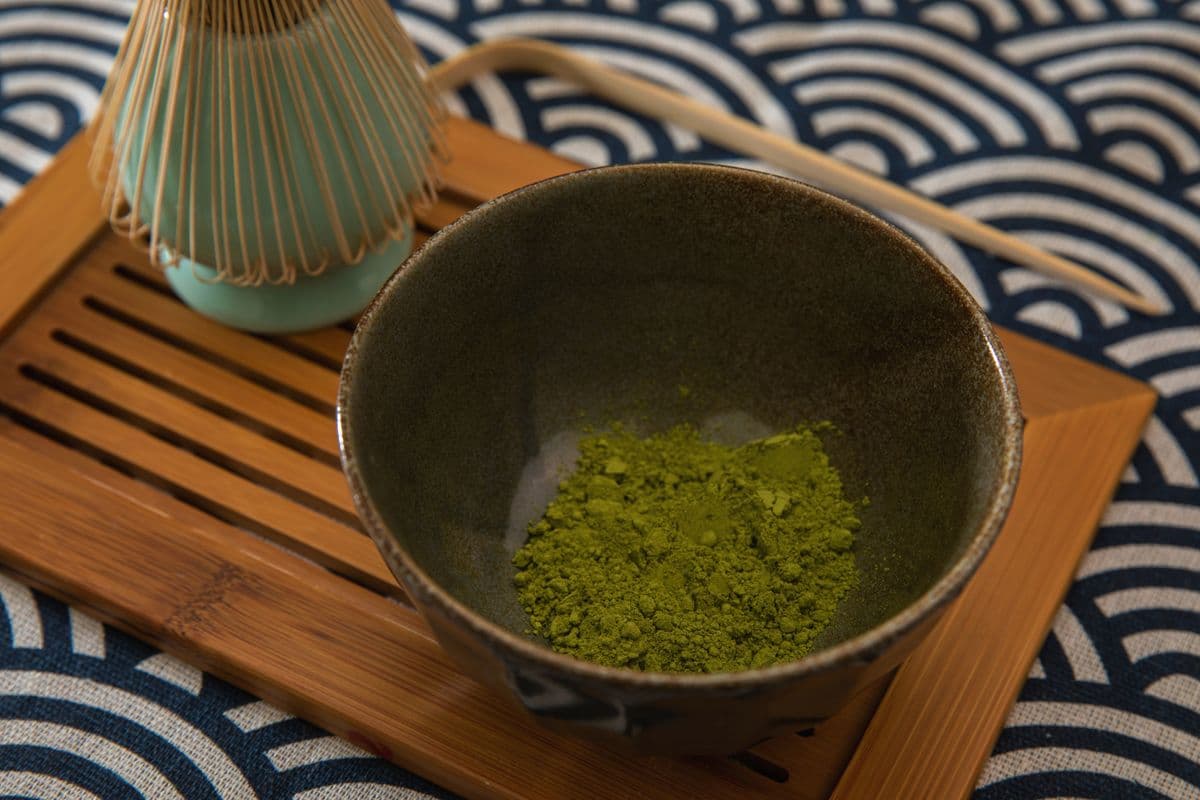
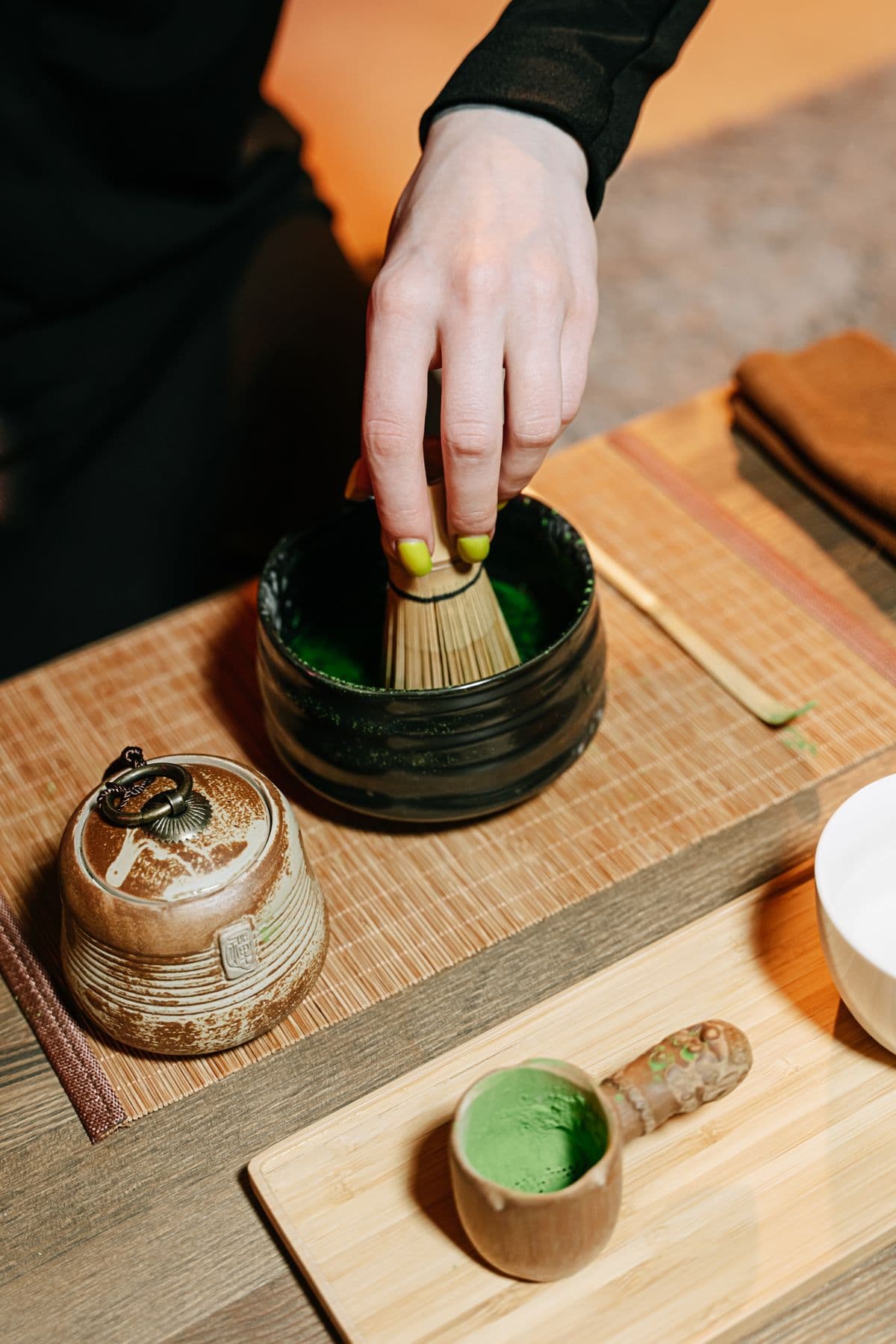
The ratio and the technique. Ippodo's published recipes use about 2 grams of matcha and 60 milliliters of 80°C water for usucha, whisked vigorously in an M-shaped motion for around 15 seconds until a fine froth forms. For koicha they use about 4 grams with just 30 milliliters of water at the same temperature, mixed slowly for about 15 seconds. Twice the powder in half the water is roughly four times the concentration. Ippodo describes a proper koicha as somewhere between maple syrup and warm honey, glossy, with no foam at all.
| Factor | Usucha (thin) | Koicha (thick) |
|---|---|---|
| Matcha | ~2 g | ~4 g |
| Water | ~60 ml at 80°C | ~30 ml at 80°C |
| Technique | Brisk M-shaped whisking, ~15 s | Slow kneading, no foam |
| Texture | Light, frothy | Glossy, between maple syrup and honey |
| Caffeine (est.) | ~65 mg | ~130 mg |
| Grade needed | Any drinking grade | Top-tier, koicha-rated blends |
Where do usucha and koicha come from?
Both are part of the Japanese tea ceremony, and the main schools still teach them as separate procedures. Urasenke, one of the largest schools, publishes a dedicated procedure guidebook covering how to make and serve koicha with either the summer brazier or the winter sunken hearth, separate from its usucha material, a sign of how distinct the two are treated in practice. Outside the tearoom, most people drink matcha as usucha or as a latte, and koicha remains a special-occasion preparation that even many regular drinkers have never tried.
Why does koicha need a higher grade of matcha?
Concentration amplifies flaws. The sweet, savory side of matcha comes largely from L-theanine and other amino acids, which shading and early harvest maximize, and a 2025 study in Plants measured about 978 mg of theanine per 100 g in a first-harvest Uji matcha versus 352 mg in a summer food grade. At usucha strength a lower grade is merely sharper; at koicha strength its bitterness and dryness dominate. A TeaChat member who once made koicha with food-grade matcha said it felt like "someone threw a packet of silicagel into my mouth." Our ceremonial vs culinary guide covers what drives those differences.
Which matcha grades are suitable for koicha?
Tea houses tell you directly, usually on the product page. Ippodo lists Ummon, one of its richest blends, with both a 2 gram usucha and a 4 gram koicha serving, and its top grade Kanza sits above that at $104 for 20 grams as of September 2026. Nakamura Tokichi's lineup runs from Fuji-no-Shiro for everyday usucha up to Uji-no-Mukashi and Ato Mukashi for koicha, which we break down in our Nakamura Tokichi grade guide. Long-time drinkers on TeaChat have praised Ippodo's Ummon as koicha that was "THICK, and actually delicious, strangely savory with a hint of refined sweetness."
How much caffeine is in koicha compared to usucha?
About twice as much per bowl, since koicha uses about twice the powder. A 2024 randomized trial measured 66.2 milligrams of caffeine in its 2 gram daily matcha serving, which puts a typical usucha around 65 milligrams and a 4 gram koicha around 130 milligrams, in strong-coffee territory. The 2025 Plants comparison also found more caffeine per gram in first-harvest grades than in a summer food grade, so a top koicha-rated blend may run a little higher still. Our matcha vs coffee guide covers how L-theanine changes how that caffeine feels.
Which one should you drink every day?
For almost everyone, usucha. It works with any decent drinking grade, costs half as much powder per bowl, and is quick to make with a whisk and a sifter. Koicha is worth trying once you own a matcha you already love as usucha and the producer rates it for koicha. TeaChat members who find a full bowl of koicha "overwhelming" recommend a bridge: make koicha, drink half, then add water to the rest and whisk it into usucha. That way one serving of an expensive grade gives you both experiences side by side.
Sources
- Ippodo — Koicha (thick matcha) recipe
- Ippodo — Usucha (classic matcha) recipe
- Ippodo — Ummon product page (usucha and koicha servings)
- Plants (MDPI/PMC), 2025 — Comparative multianalytical characterization of different grades of matcha
- Nutrients (PMC), Aug 2024 — Randomized placebo-controlled trial of daily matcha
- Urasenke Konnichian — Study resources and procedure guidebooks
- TeaChat — "Matcha: Koicha vs Usucha"
- TeaChat — "Matcha comparison"
FAQ
Is koicha a different type of matcha?
No, it is a different preparation. The same tin can be made as usucha or koicha; Ippodo lists its Ummon blend, for example, with both a 2 gram usucha serving and a 4 gram koicha serving. What differs is whether a given matcha tastes good that concentrated. Tea houses flag the blends that do, usually the top two or three grades in a lineup, and those are what people mean by "koicha grade."
Why is koicha so much more expensive?
Because it uses twice the powder per serving, and because only the top grades survive being made that thick. Koicha concentrates everything in the leaf; a first-flush, heavily shaded matcha high in L-theanine turns sweet and savory, while a later-harvest powder turns harsh and drying. Houses price koicha-rated blends accordingly: Ippodo's top grade Kanza was $104 for 20 grams in September 2026, and a 4 gram koicha bowl of it costs about $21.
Does koicha have more caffeine than usucha?
Yes, roughly double per bowl, because it uses about twice the powder. A 2024 trial measured 66.2 milligrams of caffeine in a 2 gram matcha serving, so a 4 gram koicha lands around 130 milligrams, similar to a strong coffee. Top grades may carry more: a 2025 comparison found first-harvest matcha had more caffeine per gram than a summer food grade. Koicha is usually drunk in small sips, though, not as a daily mug.
Should a beginner start with usucha or koicha?
Usucha. It is forgiving on grade, easy to make with a whisk, and it is what most people drink day to day, including in Japan. Try koicha once you have a matcha you already love as usucha and it is labeled as suitable for koicha. TeaChat regulars suggest a gentle bridge: make koicha, drink half, then add water to the rest and whisk it into usucha.
Never miss a matcha restock
Join the free Discord community and get an instant alert the moment your grade is back — or sign up to browse live stock across every major Japanese tea house.
Sources
- https://ippodotea.com/blogs/recipes-to-brew-japanese-tea/koicha
- https://ippodotea.com/blogs/recipes-to-brew-japanese-tea/usucha-thin-matcha
- https://ippodotea.com/collections/matcha/products/ummon-no-mukashi-40g
- https://pmc.ncbi.nlm.nih.gov/articles/PMC12157965/
- https://pmc.ncbi.nlm.nih.gov/articles/PMC11397442/
- https://www.urasenke.or.jp/texte/resources/
- https://www.teachat.com/viewtopic.php?t=10349
- https://www.teachat.com/viewtopic.php?t=9086